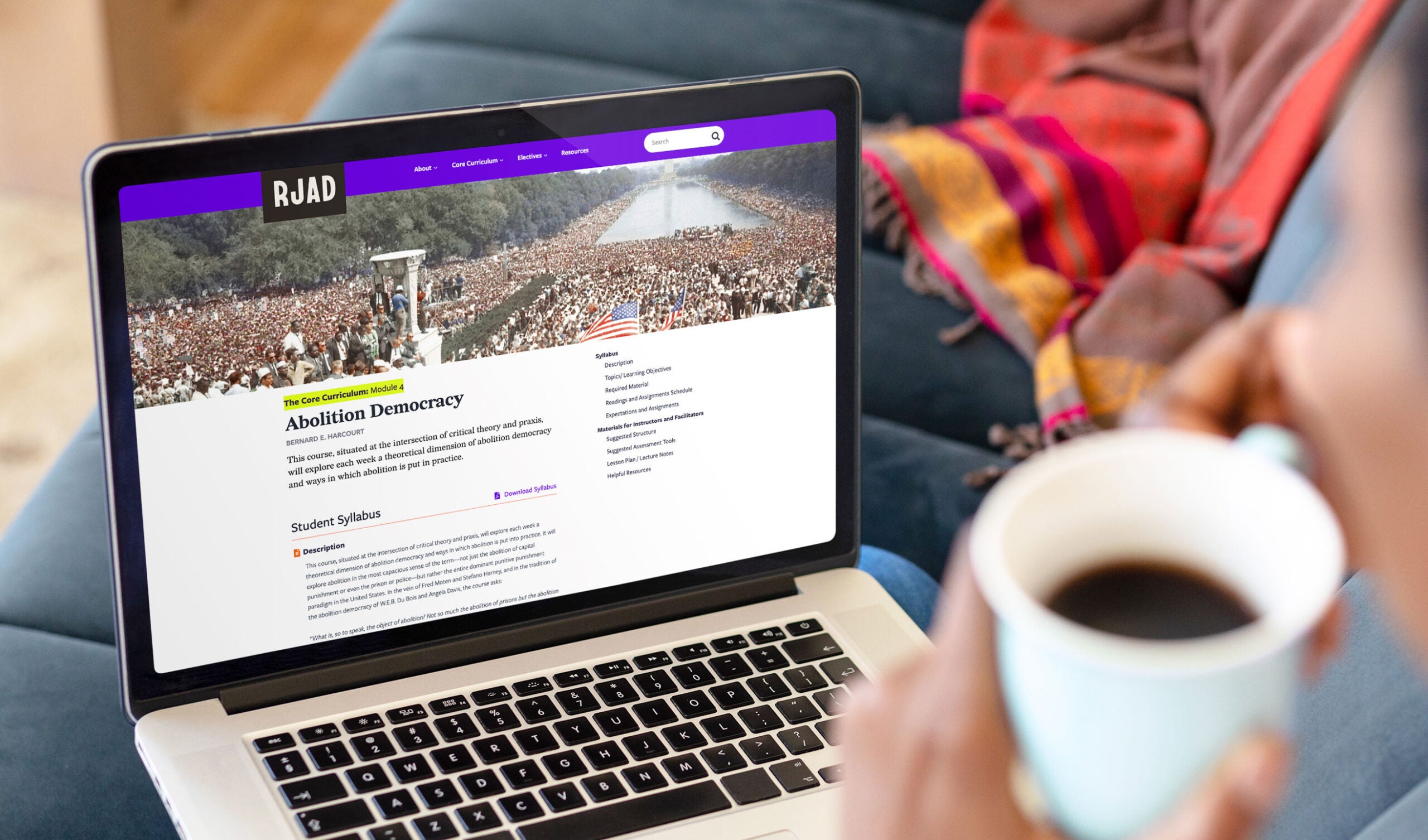
Racial Justice & Abolition Democracy — RJAD — is a prototype curriculum designed by and for those committed to exploring an end to mass incarceration.
The project is a collaboration between the Columbia University Square One Project and the Columbia Law School Initiative for a Just Society. The curriculum’s goal is to encourage learning about the history of racial injustices and to reimagine a more fair and just society without jails and prisons.
The project originated from conversations with representatives of impacted communities, including some who were already trying to teach these concepts but lacked funding or resources. Armed with input and direction from these impacted communities, they identified the core concepts and curriculum and additional people were hired to form the RJAD team.
Proven has worked with Columbia before, including the award-winning digital version of a special volume of the Columbia Law Review — an in-memoriam tribute to the late Justice Ruth Bader Ginsburg. The RJAD team wanted this new project to be equally accessible and usable for academics and non-academics, so when we were approached for this important project, our team jumped at the opportunity.
A Trusted Source Across Audiences
Following our discovery phase, we first considered how to best reach audiences with different needs and levels of familiarity with the concepts. We understood that the site needed to appeal to and serve a wide variety of people in a welcoming, trustworthy way. Courses are adapted for different audiences, so we also looked at how to connect the content in a way that made sense for each user.
Our plan included progressive disclosure so everyone, from beginners to experts, can find what they need. For those just beginning to educate themselves on racial justice issues, the content needed to be presented in a way that was digestible and encouraged them to explore. However, advanced users also needed to depend on it as an ongoing resource and supplement for their own work.
“I want people to feel like they have a space to impact change, like their voice matters. And to have the tools.”
Shaping the Experience
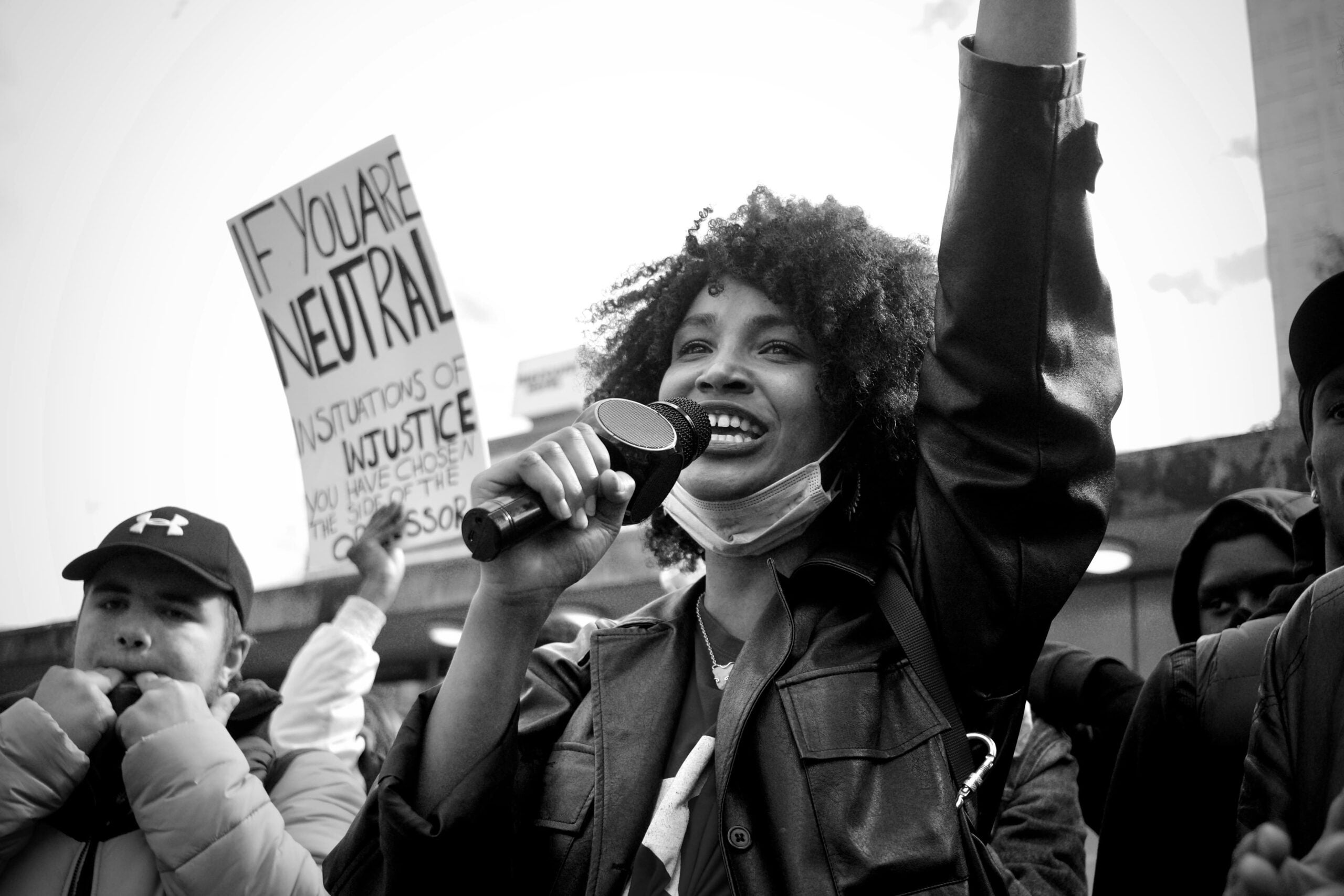
Our UX strategy included mega menus, which revealed multiple layers of content at once, allowing users to quickly explore what’s available while making it easier to jump into a specific area of exploration.
Local navigation was used to display deeper levels of curricula and to allow users to jump between sections within a single course or subject. For pages with significant amounts of content, jump links give users another way to quickly navigate to what they need. Where relevant, internal and external related content, such as additional recommended courses, reading lists, and related articles, was cross-linked to encourage further exploration.
Designing With Intention
With any project, we are very intentional with our design choices, taking into account the project’s history, stakeholders, and emotional impact to create the most powerful design possible. We knew to truly honor the project and our partnership with RJAD, our selections needed to draw from the rich visual history of the Civil Rights Movement and also pay homage to Black designers and typographers.
Thoughtful Typography Choices
For this project, we knew representation would be crucial, so we chose to use typefaces designed by Black typographers. In addition, the three main typefaces we selected were chosen not for their visual effect alone, but also their thematic and historical meaning.
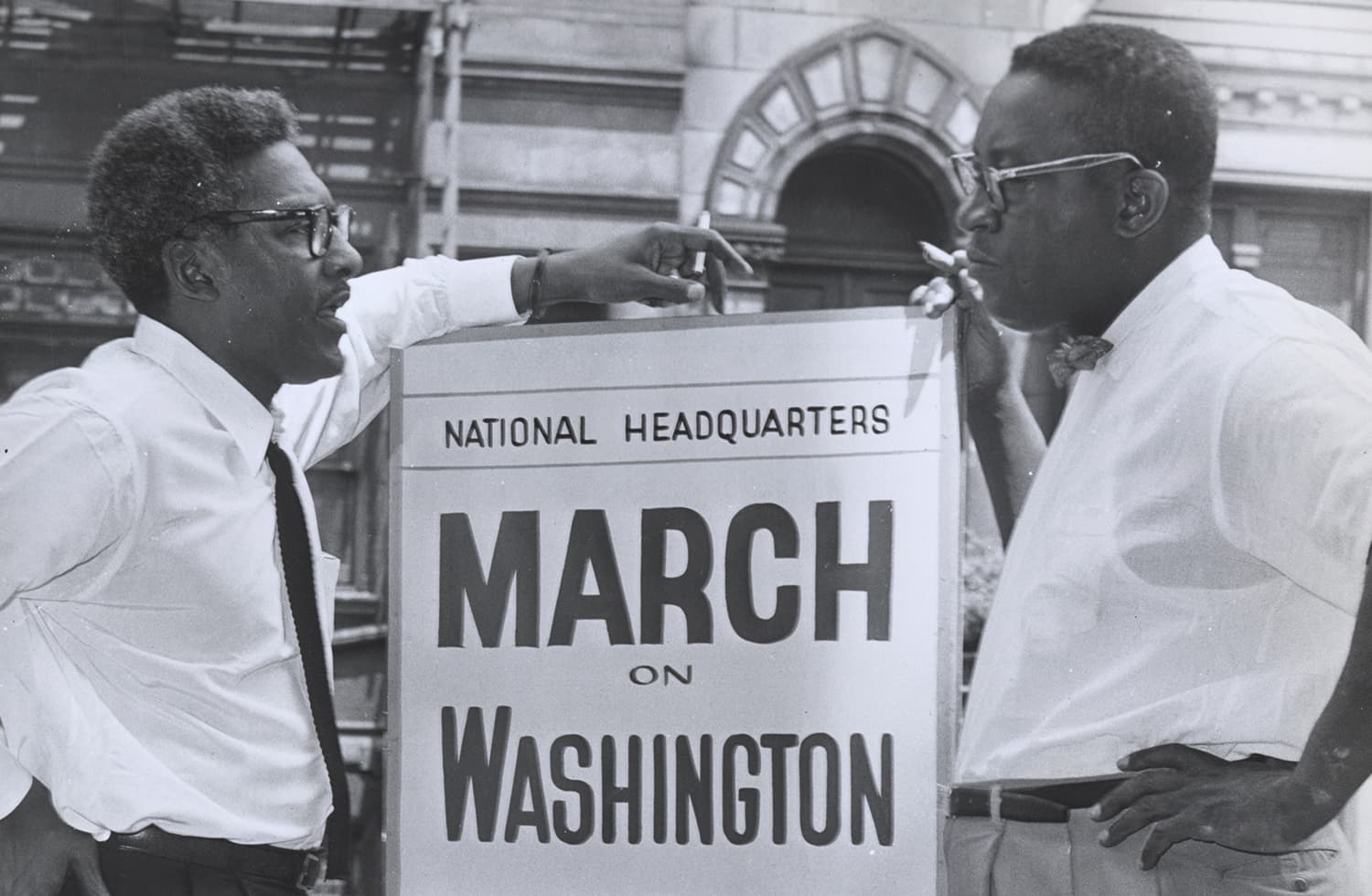
First, we set out to identify the ideal font for RJAD’s logotype. For personality and visual impact, we explored the use of a wordmark font that embodies the activist spirit of the content without being overwhelming. Enter Bayard, a unique sans-serif typeface inspired by signs from the 1963 March On Washington for Jobs and Freedom. Designed by Tré Seals, Bayard is aptly named for Bayard Rustin (1912-1987), the March’s principal organizer and close advisor to Dr. Martin Luther King, Jr.
Next we selected Redaction, a bespoke typeface commissioned by Titus Kaphar and Reginald Dwayne Betts for their exhibition The Redaction at the Museum of Modern Art. The exhibition highlights abuses in the criminal justice system, in particular the way poor and marginalized individuals are imprisoned for failing to pay court fines and fees.
The Redaction font drew inspiration from typography found in U.S. legal documents, particularly New Century Schoolbook, the mandated font for U.S. Supreme Court documents. Kaphar and Betts collaborated with designers Jeremy Mickel and Forest Young to create the typeface and distribute it under the Open Font License as part of their dedication to social justice and legal equity.
Finally, we also chose to use the Freight Collection, which was designed by Joshua Darden, the first widely-credited African American type designer. Inspired by the warmth and pragmatism found in 18th-century Dutch typefaces, Freight has a huge range of weights, widths, and optical sizes for a total of 156 fonts. The array of fonts in the collection allowed us to use words as art to express emotions, from bold and gutsy to humble and reserved. Notably, two Freight fonts are also the brand typefaces for the National Museum of African American History & Culture.
Adding Visual Emphasis
When considering RJAD’s color palette, we began with the neon green, selected to create brand cohesion with The Square One Project of Columbia University. From there, we researched a wide range and number of Black-owned businesses and found that the brand colors in use tended to be bold and brilliant. We selected orange for its guts and grandeur, while electric purple was chosen for its strength and power.
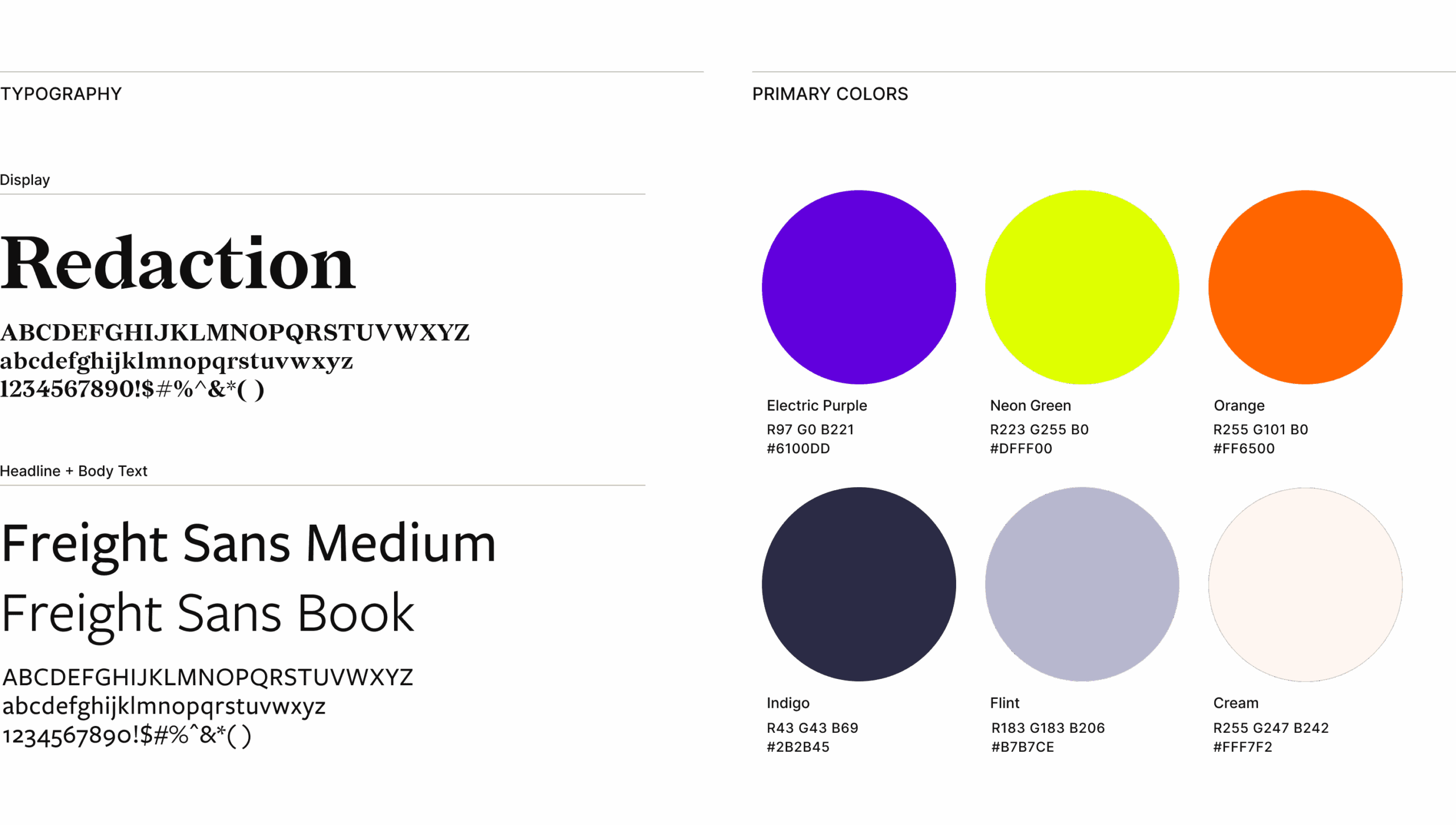
Adding Visual Emphasis
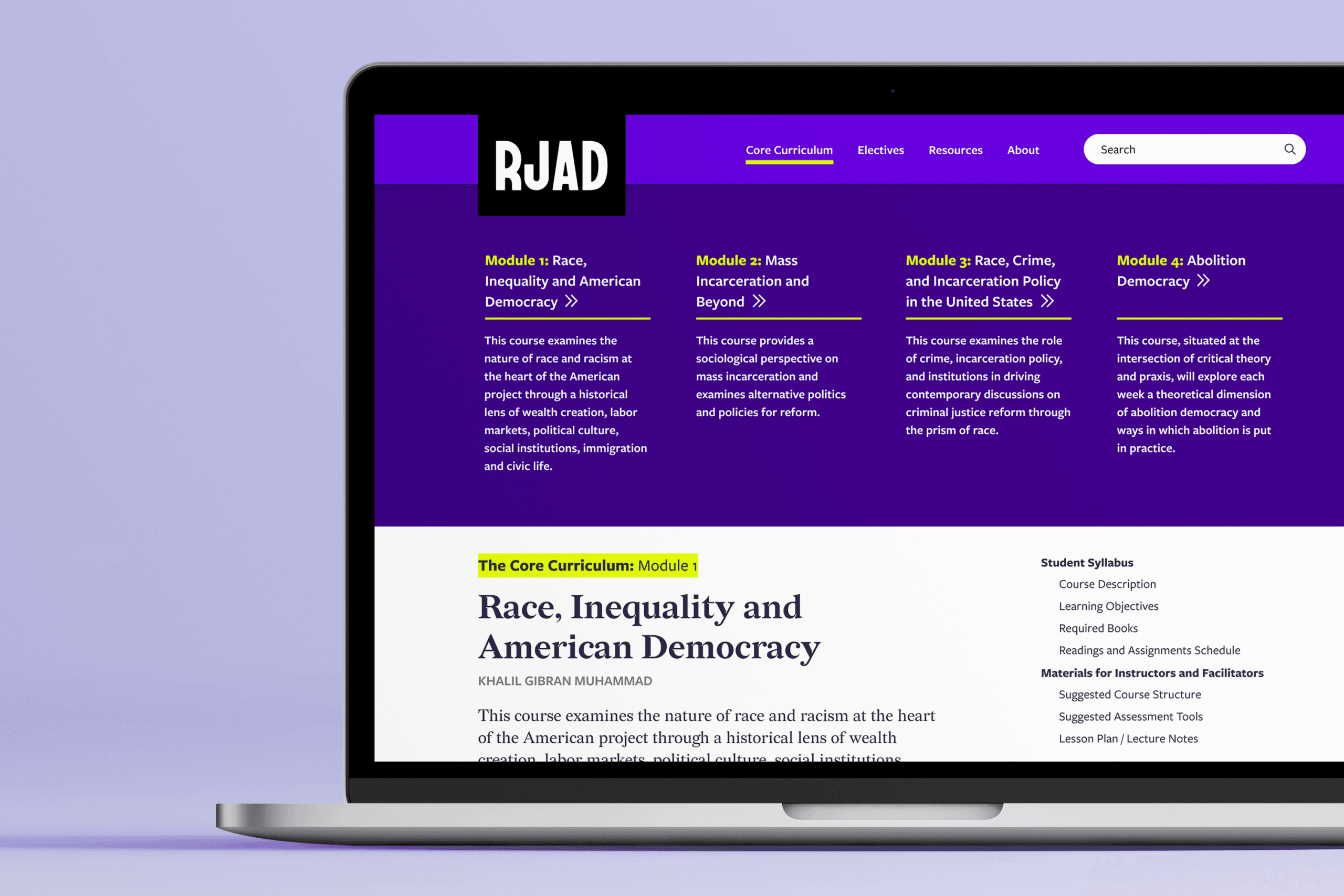
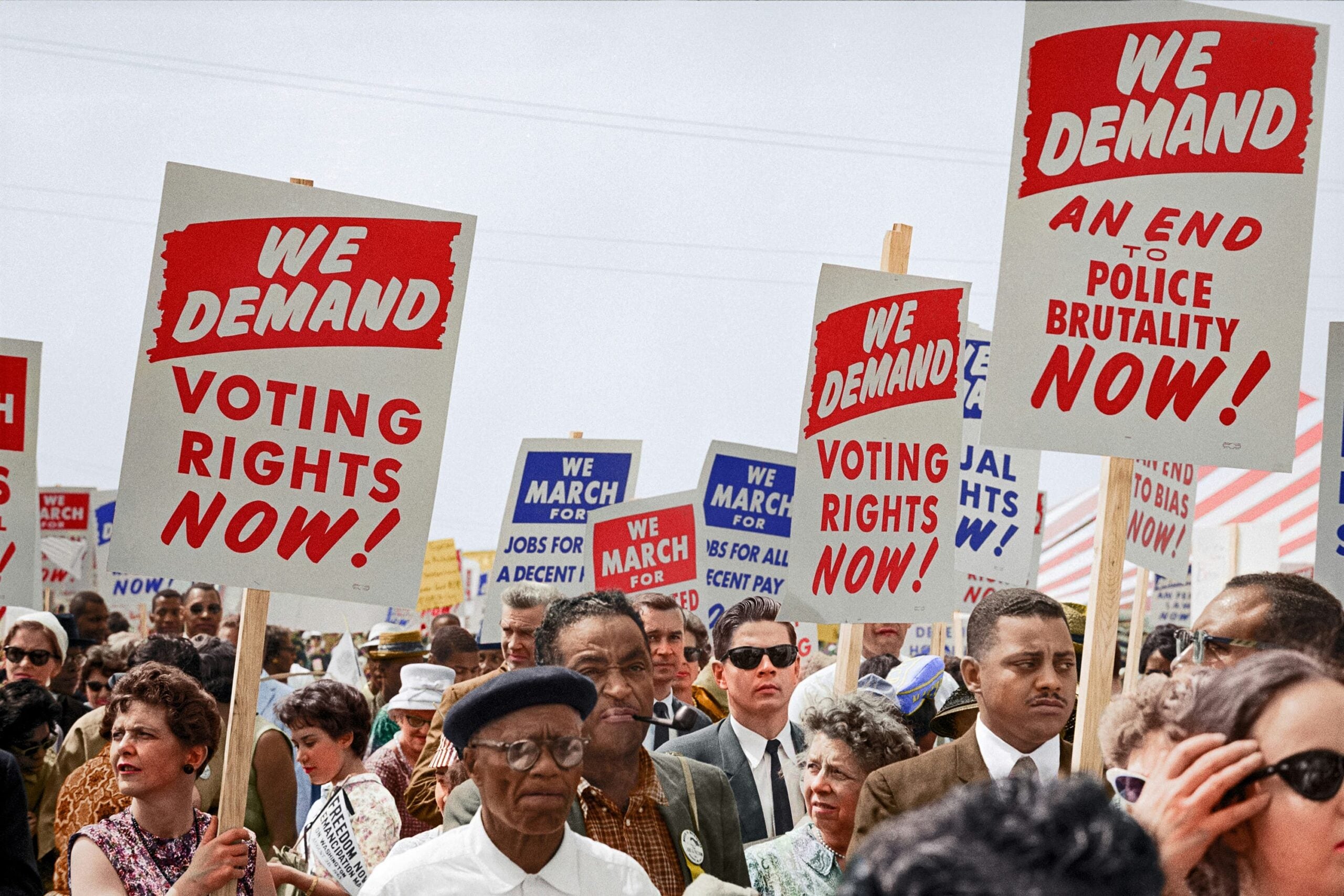
The final piece to the site’s visual impact was photo selection. It was important that the photography used on the site be authentic and impactful, so we leaned away from stock photography as much as possible and sourced images from photojournalism throughout history. We first sourced a selection of historical photos from the Library of Congress. Remaining photos were selected from a unique project presented by Unsplash and the Library of Congress, wherein visual historian Jordan Lloyd restored and recolored public-domain images from the Civil Rights Movement.
All of these pieces culminated in a striking visual design that honors the intent of RJAD’s courses, while acknowledging our shared history and pushing for a more equitable and just society for all.
At the center of our work is the humanity that connects us all – including our experts and yours. Let us craft proven solutions for your most pressing challenges.
Related Insights