

We are well beyond a time when we can merely be reactive about the impact humans and technology have on the world. Sustainable development was first defined and identified as a critical need nearly 40 years ago.
“Sustainable development is development that meets the needs of the present without compromising the ability of future generations to meet their own needs.”
Our Common Future (Brundtland Report, October 1987)
World Commission on Environment and Development
This is a simple message with broad implications. The referenced concept of sustainable development includes the recognition that the many issues facing a sustainable future for the planet are interlocking crises — symptoms of a single crisis of the whole — and require the active participation of all sectors of society.
Use Our Score Sheet to Check Your Sustainability Impact Score
It isn’t the major world powers who are experiencing the true consequences of irresponsible technological change and waste; it’s the nations with the least access to those same technologies that bear the brunt of its effect on our environment. At Proven, we know that when those with the power to make change take responsible action, the majority of the world and its population benefit.
Our collective future is not something to wait for but something to create. Our philosophy is rooted in action — building a sustainable world today by being the change we wish to see. We are committed to a vision where innovation and sustainability intertwine, driving equity and prosperity. For us, every solution must uplift people and protect the planet, ensuring that progress and responsibility go hand in hand.
We Believe in Reframing Sustainability
Sustainability isn’t about sacrifice — it’s about opportunity. We can’t turn back time to a so-called “perfect balance” with nature, but we can shape a future that benefits both people and the planet.
We have the power to leverage the same innovation that drives technological progress to find creative, solutions-oriented approaches that address the environmental impact of those advancements. At its core, “sustainability” means preserving balance, but true sustainability goes beyond that — it’s about taking responsibility for creating lasting, positive change.
We cannot undo what has been done, but we can strive to make better choices every day, for every project.
We constantly challenge ourselves to answer questions like:
- How can we reduce the carbon footprint of our digital solutions?
- How can we leverage our platforms to educate and inspire?
- Where can we reinvest to serve the greater good?
- How can we hold ourselves accountable and measure our impact?
We Believe in Decoupling Growth from Environmental Impact
Decoupling economic growth from environmental impact isn’t just a lofty ideal or a distant goal, it’s a necessity for our shared future — and the data1 shows us that progress is not only possible, it’s happening right now.
We’re seeing tangible evidence that countries can grow their economies while simultaneously reducing their carbon footprints. This isn’t happening everywhere, and it’s not happening fast enough, but the fact that it’s happening at all is cause for hope. We’re challenging the old narrative that the world must choose between technological innovations and environmental protection — we have the proof that this is a false dichotomy.
Reframing sustainability allows us to see new opportunities everywhere. Suddenly, environmental regulations aren’t costs to be borne, but catalysts for innovation. Clean energy isn’t just about reducing emissions, but about creating new industries and jobs. Efficiency isn’t just about saving resources, but about increasing competitiveness.
Of course, embracing the decoupling of progress and sustainability doesn’t mean ignoring the challenges. The transition isn’t easy, and it’s not happening at the same pace everywhere. Developing nations, in particular, face unique hurdles as they strive to lift their populations toward economic prosperity while also protecting their natural resources. This is where global collaborative effort becomes crucial. Only you are able to participate on your behalf, but the community of the world needs us each to participate to the best of our abilities.
How does this impact our work at Proven? We remain cautious about implementing large-scale AI tools due to concerns about environmental sustainability and regulatory oversight. This caution arises from the significant energy consumption associated with many AI systems, which can lead to increased carbon emissions if powered by fossil fuels. At Proven, we believe that technology should not compromise our commitment to the planet.
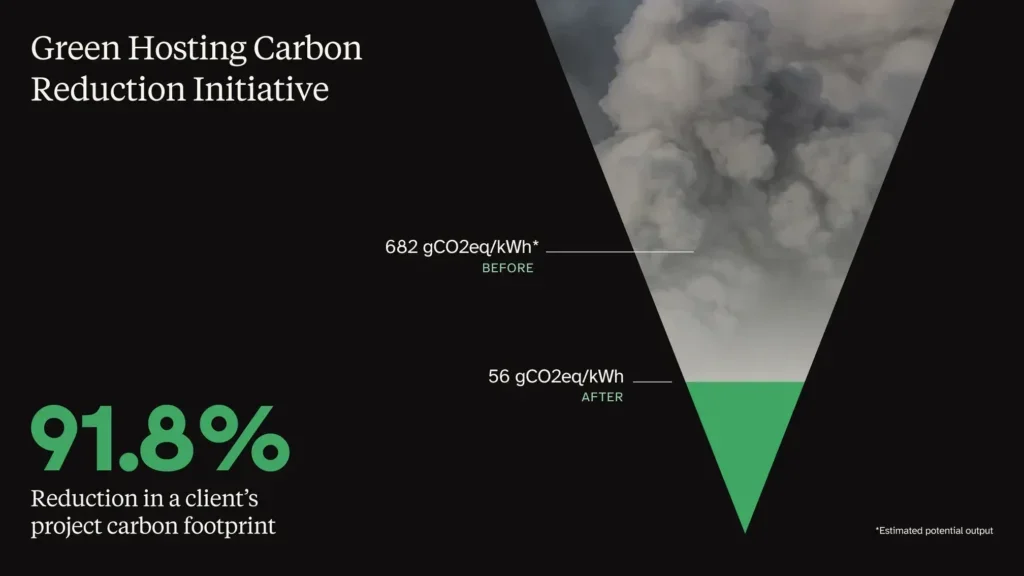
We are dedicated to using data to track progress and inspire action, ensuring our innovations align with sustainability and responsibility. By offering our partners varying levels of sustainable hosting and environmental impact reduction services, we empower organizations to choose solutions that fit their goals and resources.
Measuring data is crucial for understanding the effectiveness of our sustainability initiatives. By tracking key performance indicators related to energy use and emissions, we provide actionable insights that enhance accountability and identify areas for improvement. By focusing on transparent practices and measurable outcomes, we aim to contribute positively to the decoupling process, demonstrating that technology can indeed serve as a force for good in the fight for a more sustainable and equitable future.
We Believe in Equity & Innovation
We’ve seen this philosophy in action through projects like our work with March of Dimes, where we transformed complex maternal health data into an accessible platform, empowering communities with critical knowledge. Similarly, our work with the Racial Justice & Abolition Democracy (RJAD) project made complex curricula on racial justice accessible to a wide audience, facilitating important societal conversations.
We know diverse teams forge the strongest solutions. Our commitment to equity and innovation isn’t just a philosophy; it’s a cornerstone of our approach to sustainable development. We embrace disagreement as a catalyst for discourse, knowing that diverse perspectives lead to comprehensive solutions that address root causes, not just symptoms. This approach drives our success and shapes our commitment to building inclusive teams in tech. Our focus extends beyond immediate results. We develop solutions that meet current needs while considering long-term impacts, crucial for empowering underrepresented groups and promoting equitable access to technology.
Sustainable Development Is Not Just Possible, It’s Essential
At Proven, we’re actively building the sustainable future we envision, project by project. Our daily work demonstrates that equity, innovation, and sustainability are not just compatible — they’re inseparable pillars of progress.
Our approach turns philosophy into action. This is our commitment, our expertise, and our proven path forward. The challenges we face are urgent, but so are the opportunities. We invite you to join us in this critical mission. Together, we can harness the power of diverse perspectives and cutting-edge technology to tackle today’s problems while safeguarding our collective future.
Stay tuned for the second installment of our Commitment to Sustainability & Equity series.
- Freire-González, J., Padilla Rosa, E., & Raymond, J.L. (2024). World economies’ progress in decoupling from CO2 emissions. Scientific Reports, 14, Article 20480. Link Gbadeyan, O.J., Muthivhi, J., Linganiso, L.Z., & Deenadayalu, N. (2024). Decoupling Economic Growth from Carbon Emissions: A Transition toward Low-Carbon Energy Systems—A Critical Review. Clean Technologies, 6(3), 1076-1113. Link Jiang, Y., Tian, S., Xu, Z., Gao, L., Xiao, L., Chen, S., Xu, K., Chang, J., Luo, Z., & Shi, Z. (2022). Decoupling environmental impact from economic growth to achieve Sustainable Development Goals in China. Journal of Environmental Management, 312, 114978. Link Leitão, J., Ferreira, J., & Santibanez-González, E. (2022). New insights into decoupling economic growth, technological progress and carbon dioxide emissions: Evidence from 40 countries. Technological Forecasting and Social Change, 174, 121250. Link
Do you have questions or thoughts about the steps you can take to make a commitment to responsible action and sustainable development?