

The road to fragmented solutions is paved with good intentions, built one tool at a time. As purpose-driven organizations increasingly rely on technology to scale and measure their impact, many find themselves trapped in a paradox of their own making. The very digital tools and systems they adopted to increase efficiency and productivity have created a fragmented ecosystem that quietly drains time, resources, and impact.
The Fragmentation Trap
A fragmented ecosystem can quickly arise as an organization addresses emerging needs. For instance, a nonprofit’s fund development team selects donor management software that best suits their team’s needs and offers the analytic tools and dashboards they’ve long dreamed of. However, the software isn’t compatible with their current website, where most of their donations are made. To solve this, the web development team creates an API allowing the two systems to speak to each other. Fantastic!
However, updates to the site can occasionally sever the connection with the fund development software. The team noticed dwindling online donations, but they weren’t certain until a few days later that it wasn’t just a lull in donations but rather a disconnection between the two systems. Now, they not only need the web development team to reconnect the two, but they also need to manually enter the missing data into their fund development software.
This example of just two mission-critical systems — fund development software and the organization’s website — illustrates how quickly organizations can inadvertently create fragmented ecosystems. As teams and systems grow, so too do their complexity and costs.
The True Cost of Disconnection
Financial Drain
While individual financial costs are apparent, larger organizations may find it difficult to assess whether the spending is truly mission-critical. Does this business unit need all four licenses that are being paid for? Has this team’s workflow changed to one where this software simply houses historical information rather than being used daily? Is this individual still using this software, or did they forget to cancel the free trial?
With more systems, managing and auditing subscriptions, licenses, and vendors becomes increasingly difficult. This can bloat monthly and annual bills and does not even account for the costs of implementation, customization, or integrations.
Accumulation of Technical Debt
When organizations adopt multiple disconnected systems, they accumulate technical debt, which is the future cost of maintaining an increasingly complex technical infrastructure. This can lead to ongoing integration challenges, security vulnerabilities, reduced agility, higher costs, and the growing expertise required to manage disparate systems.
Operational Inefficiencies
When systems don’t communicate, staff members have to fill the gap, manually transferring data between platforms, reconciling inconsistencies, creating workarounds for missing functionality, and duplicating work to ensure all of their bases are covered. Did that document get sent via chat, over email, or is it in the drive? Why aren’t our Q3 metrics displaying in the dashboard when they’re reflected in our data?
The effects of fragmentation permeate the whole organization. Onboarding new team members becomes increasingly complex, institutional knowledge becomes siloed within specific tools (and those who are the de facto experts on them), cross-functional collaboration requires navigating multiple platforms, and decision-making is slowed as data must be gathered from multiple disparate sources.
Data Integrity
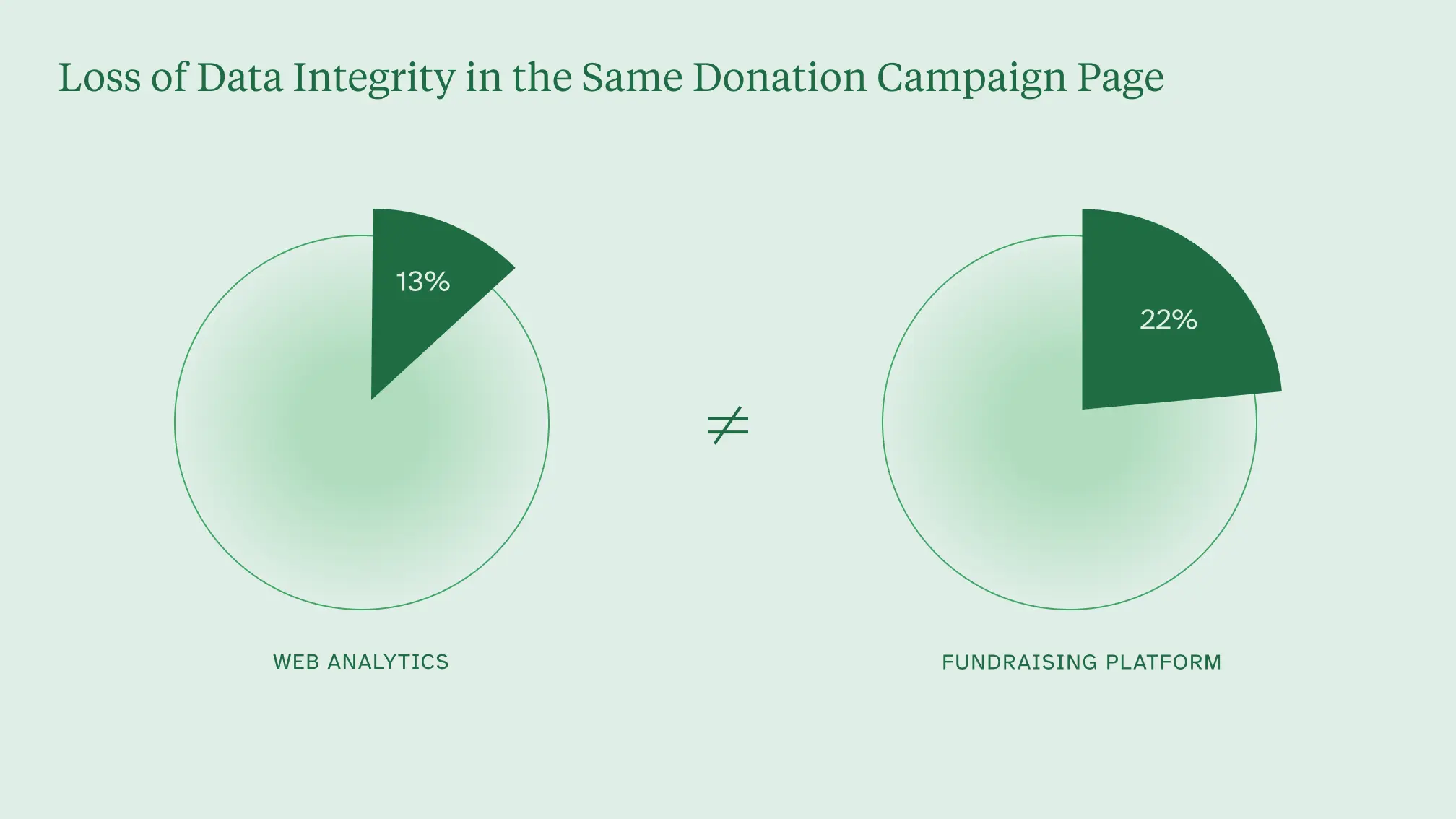
A particularly insidious cost of fragmentation is the loss of data integrity. When information does not readily flow between systems, it often leads to manual data entry or reconciliation, inconsistent information, increased likelihood of errors in reporting, and delayed access or inability to access critical KPIs.
Mission Drift
Perhaps the most heartbreaking effect of fragmentation is its detriment to mission delivery. When teams spend more time managing systems than serving beneficiaries and stakeholders, the organization’s impact is diluted. Program managers focus on administrative overhead rather than program improvement. Development directors chase data rather than relationships. Executive directors lose sight of the bigger picture when drowning in disconnected metrics.
Break Free from Fragmentation
Better systems aren’t the antidote to fragmentation. Addressing the issue requires a holistic approach to your organization’s digital ecosystem, including auditing your current technology landscape to identify redundancies and gaps, mapping information flows to understand where disconnects are causing friction for your team, prioritizing integration capabilities when evaluating new solutions, and considering full-service partners who can help unify your ecosystem.
Building Unified Ecosystems
Our approach works to amplify your impact rather than impede it. By bringing critical functions under one roof, your team can make decisions based on complete, accurate information, create seamless experiences for stakeholders, and redirect staff time to the mission rather than minutia.
Holistic Strategy & Implementation
When one team handles your marketing, technology, and strategic needs, they develop solutions with your entire ecosystem in mind. No more disconnected systems that don’t communicate — just cohesive strategies implemented through compatible technologies.
Single Point of Accountability
Rather than managing relationships with multiple vendors who may point fingers when issues arise, a full-service agency provides clear accountability. One team is responsible for ensuring all systems work together seamlessly.
Simplified Vendor Management
Managing multiple vendor relationships consumes valuable time and resources. A full-service partnership streamlines communication, billing, and project management, allowing your team to focus on mission-critical work.
Future-Proofed Solutions
Finally, as your organization grows, a full-service partner evolves your digital ecosystem thoughtfully, preventing the accumulation of technical debt and ensuring new solutions integrate with existing systems.
Align Your Tech With Your Mission
The most effective purpose-driven organizations recognize that technology strategy is mission strategy. By addressing fragmentation and building unified systems, you strengthen your organization’s digital foundation to support your mission rather than hinder it.
At the center of our work is the humanity that connects us all – including our experts and yours. Let us craft proven solutions for your most pressing challenges.