
Smart public transportation builds cities that work for everyone.
Through technology, we’re creating sustainable, accessible transit system solutions that strengthen communities and economies for millions.
When tasked with transforming the digital presence of one of the nation’s largest public transit systems — serving two million users monthly — we faced a critical challenge: how do you modernize a legacy system while keeping it running? Our team of experts developed customized strategies and solutions
The Connected Journey
Modern transit systems demand more than isolated technology solutions — they require a unified digital ecosystem. By creating a mass data network using a single stack configuration, we’ve helped build systems that connect hardware, software, and standard operating procedures across all transit modes. This integrated approach means better experiences for millions of monthly users.
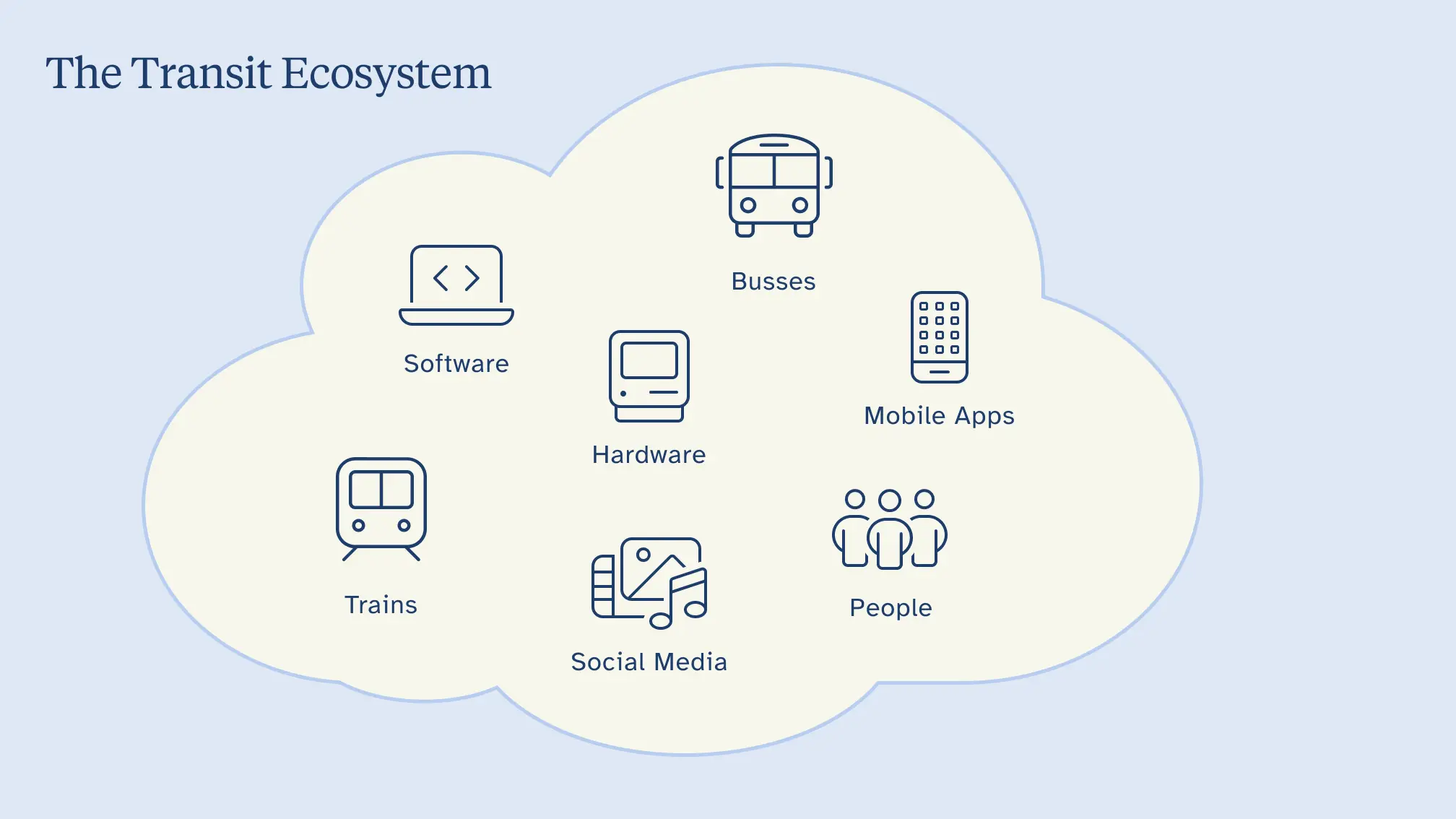
Our approach integrates real-time data feeds serving mobile applications, multi-layered architecture for reliable performance, seamless social media updates for service information, and complex user segmentation for personalized experiences.
Smart Infrastructure: The Foundation of Modern Transit
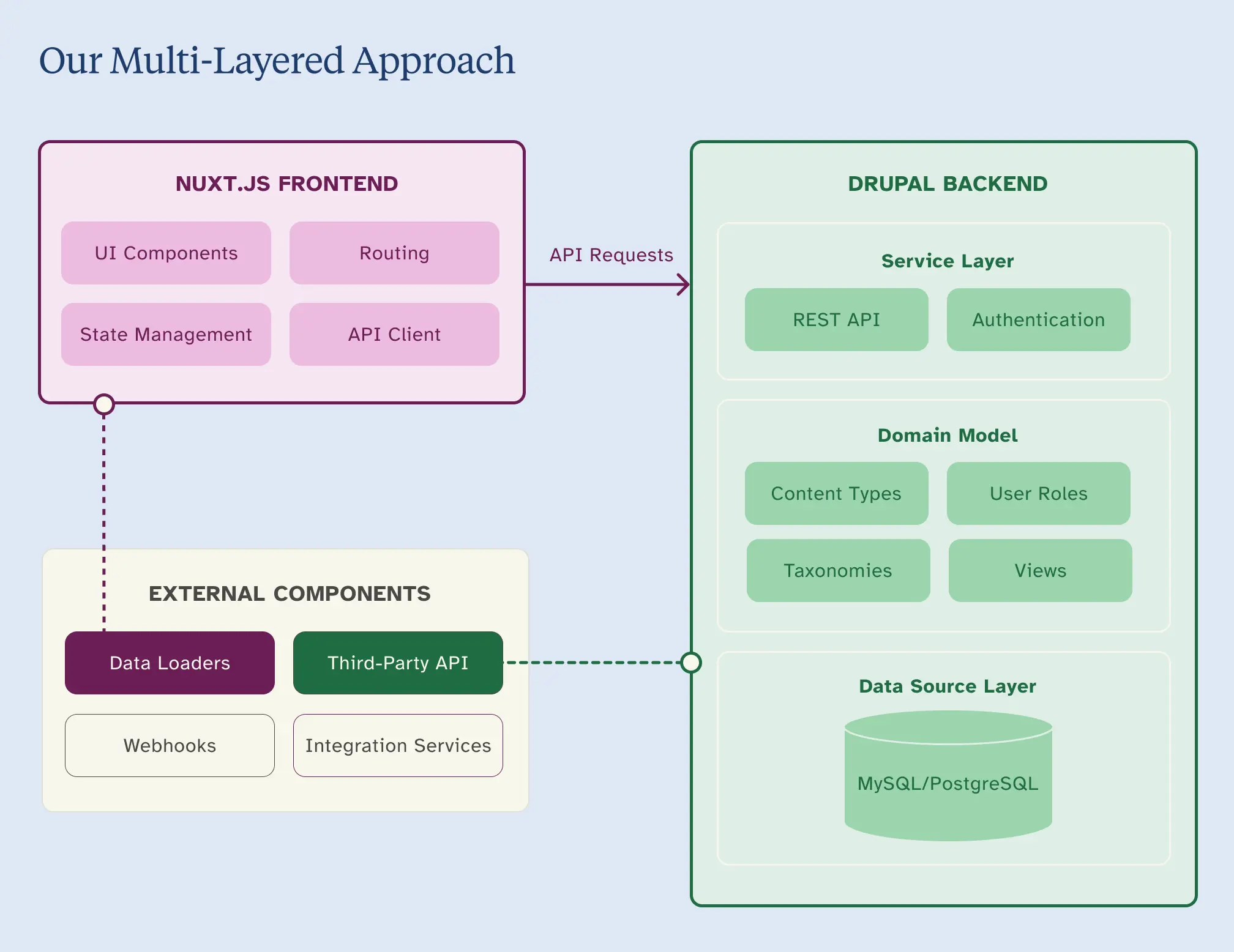
When serving millions of monthly users, traditional single-layer architectures break under pressure. Our solution? A multi-layered approach that separates content management from user-facing systems, allowing each layer to be optimized and scaled independently.
Building for Scale and Security
Our approach splits the system into distinct layers:
- Content management system isolated from front-end delivery
- Redundant AWS containers behind Fastly CDN
- Global Points of Presence (POPs) serving content efficiently
- Web Application Firewall protecting the entire stack
- Dual API integration for flexible data handling
Performance That Proves Itself
Infrastructure decisions directly impact user experience. Our multi-layered architecture, combined with strategic content delivery optimization, has achieved measurable improvements, including faster page load times through efficient content delivery, true load balancing across redundant systems, real-time updates without system strain, and consistent performance even during peak usage.
These improvements translate to better user experiences and more reliable service information delivery for millions of monthly users.
The Human Element
Understanding User Needs
Technology should solve human problems, not create new ones. While we pride ourselves on technical excellence, our greatest success comes from remembering and serving who we’re building for — the millions of people who rely on public transit every day to get to work, school, health services, and home to their families.
Creating Inclusive Solutions
Our approach to transit technology starts with the human experience. This means ensuring that all passengers, regardless of ability or technical proficiency, can easily access and understand the information they need for their journey. It’s about creating systems that feel natural and helpful, not complicated or frustrating.
Design for Everyone
Public transit is the great equalizer of our cities, serving everyone from daily commuters to first-time riders, seniors to students, and people of all abilities. Our design process embraces this diversity, creating systems that are both powerful and accessible:
- Intuitive interfaces for all skill levels
- Fully accessible systems for ADA compliance
- Consistent information delivery across platforms
- Real-time updates for informed decisions
Creating inclusive systems is just the beginning — transit authorities need effective ways to communicate these improvements to their communities.
Beyond Infrastructure: Engaging Transit Communities
Strategic Communications
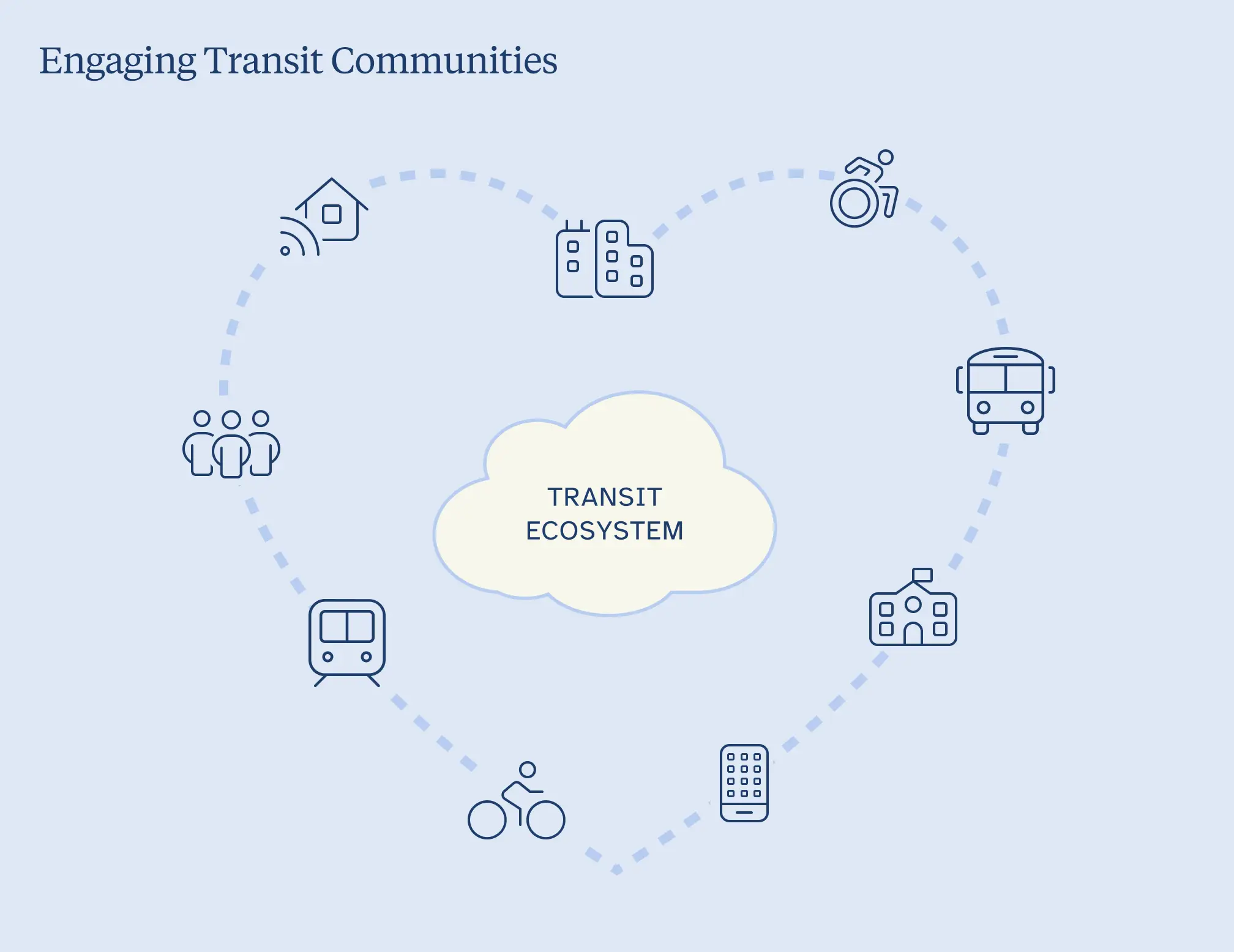
Building great technology is only part of the story. Transit systems need to effectively communicate with their communities, from service updates to system improvements. Our comprehensive approach includes developing communication strategies that keep stakeholders informed and engaged across all channels.
Managing the Conversation
We’ve created systems that help transit authorities maintain clear, consistent communication with their communities through strategic content calendar management, standardized response protocols for customer support, community engagement across social platforms, and internal communications alignment.
Measuring Success
This integrated approach to technology and communications has helped transit authorities achieve significant industry recognition, including:
- American Public Transportation Association’s (APTA) 2023 Outstanding Public Transportation System Award, recognizing excellence in service delivery and innovation
- IDC’s 2023 Smart Cities North America Award, highlighting leadership in urban transportation solutions
- Forbes 2023 CIO Next placement, acknowledging technological leadership and digital transformation
- Intelligent Transportation Society of New Jersey’s (ITSNJ) 2022 Outstanding Project Award for innovative transit solutions
These accolades reflect not just technological achievement but meaningful improvements in how millions of riders experience public transit daily.
Future-Proofing Transit
Architecture for Evolution
Transit systems can’t afford to be static. When you’re managing a mass network of data across trains, buses, and multiple transit modes, you need infrastructure that can evolve without disrupting daily service. Our single-stack configuration means updates and improvements can be implemented systematically across the entire transit ecosystem.
We’ve built our systems with clear separation between components, allowing transit authorities to update and enhance services independently:
- Front-end systems that can be modernized without disrupting back-end operations
- API-driven architecture enabling seamless third-party integrations
- Content management systems that grow with changing needs
- Analytics implementation for data-driven improvements
Building for Tomorrow
Our flexible infrastructure supports transit authorities as they implement next-generation rider experiences. Our systems have been architected to seamlessly integrate with innovative solutions, including:
- First-mile / last-mile tracking systems help riders coordinate their complete journey
- IoT-enabled sensor networks provide real-time platform and vehicle information
- Dynamic capacity monitoring systems help riders find less crowded cars
- Integration capabilities with rideshare partnerships and alternative transportation options
By building flexibility into every layer of the system, we ensure transit authorities can adopt new technologies and respond to changing rider needs while maintaining the reliable service their communities depend on.
As transit systems nationwide compete for federal infrastructure funding, having a solid digital modernization plan is crucial. The future of public transportation isn’t digital — it’s experiential. By combining thoughtful user experience design with robust technical infrastructure, we create systems that don’t just move people; they integrate into their lives.
This isn’t theoretical; it’s how we’ve helped one of the nation’s largest transit systems serve millions of users while continuously evolving their digital services.
Schedule a focused system architecture review with our transit technology experts. We can help identify your key modernization priorities and outline potential next steps.