

The digital landscape we navigate daily is filled with carefully crafted user experiences; however, not all have the user’s best interest in mind. Deceptive patterns, previously known as “dark patterns,” remain a challenge for netizens. These intentional design and copywriting choices are employed to manipulate users into taking actions they otherwise may not or create near-insurmountable hurdles that leave users little choice but to give up.
In addition to being unkind and unethical, deceptive patterns create a divide in our digital ecosystem by disproportionately affecting some populations, such as those who are neurodivergent or those with limited technical expertise. By eliminating deceptive patterns in your web practices and calling them out when others employ them, we take a crucial step toward creating a more inclusive, ethical, and equitable digital world that empowers its users rather than exploiting them.
What Do Deceptive Patterns Look Like?
At their core, deceptive patterns create friction in the user experience to intentionally benefit the web service at the detriment of the individual user. Deceptive sites may intentionally hide more user-friendly choices, use confusing or manipulative language, make it difficult (or impossible) to cancel subscriptions, and much more. Some common examples include:
Account Cancellation or Deletion Hurdles
One of the most common deceptive patterns is a hidden or complex cancellation process. Whether the user is trying to delete a social media account, cancel a subscription, or end a free trial before charges ensue, hurdles in the cancellation process can frustrate, threaten privacy, and cause financial harm.
This pattern is particularly harmful when combined with a recurring subscription that the user never intended to enroll in initially. The Federal Trade Commission filed a complaint against Amazon alleging just such conduct. The complaint makes the case that Amazon first employed a button stating “Get Free Two-Day Shipping” which enrolled consumers in Prime Membership without their express knowledge and consent. This, combined with an “End Membership” button that did not simply cancel their membership but instead led to multiple retention offers, according to the complaint, resulted in millions of Prime members being charged for subscriptions they didn’t realize they had or thought they had successfully canceled.
Disguised Ads
Another common pattern is the disguised ad. A frequent instance of this is editorial sites that include sponsored links amid related articles. However, this pattern has a significant amount of grey area depending upon the level of disclosure made and the legitimacy of the information there.
For instance, pop-ups that claim a user’s computer is infected with a virus or malware are almost certainly an outright scam. Meanwhile, a link on an influencer’s social media post that is not properly labeled as an affiliate link may just be the result of a hasty post. Even within a sponsored link on an editorial website, there is significant variance. It may simply be an article that an advertiser paid to post, which is otherwise innocuous, or it could be a link to something more nefarious like a malware download.

Fake Scarcity or Urgency
A favorite deceptive pattern of less-than-reputable ecommerce sites includes fake urgency, scarcity, or both. While both scarcity and urgency are legitimate factors in ecommerce, they must not be falsely concocted to manipulate consumers. For instance, a frequent customer may receive a promotional email stating that there are just two items left in their size when the retailer knows with certainty that there are actually 20. What’s more — these items are 30% off, and the sale ends in just 8 hours! Meanwhile, the item was merely marked up so the “sale” price was its usual retail price.
Hidden Costs or Subscriptions
This pattern was a favorite of infomercials for quite some time — customers would be drawn in by a free trial (just pay shipping and handling!) only to find later that they were enrolled in a monthly subscription, one that usually proved very difficult to cancel. In the more digital world, this may look like an app that is all but useless unless you sign up for the previously undisclosed subscription. Another example has been long employed by some ticket resellers, where their sites displayed only the base price while substantial service and fulfillment fees were not disclosed until the moment the user checked out.
Shaming Language
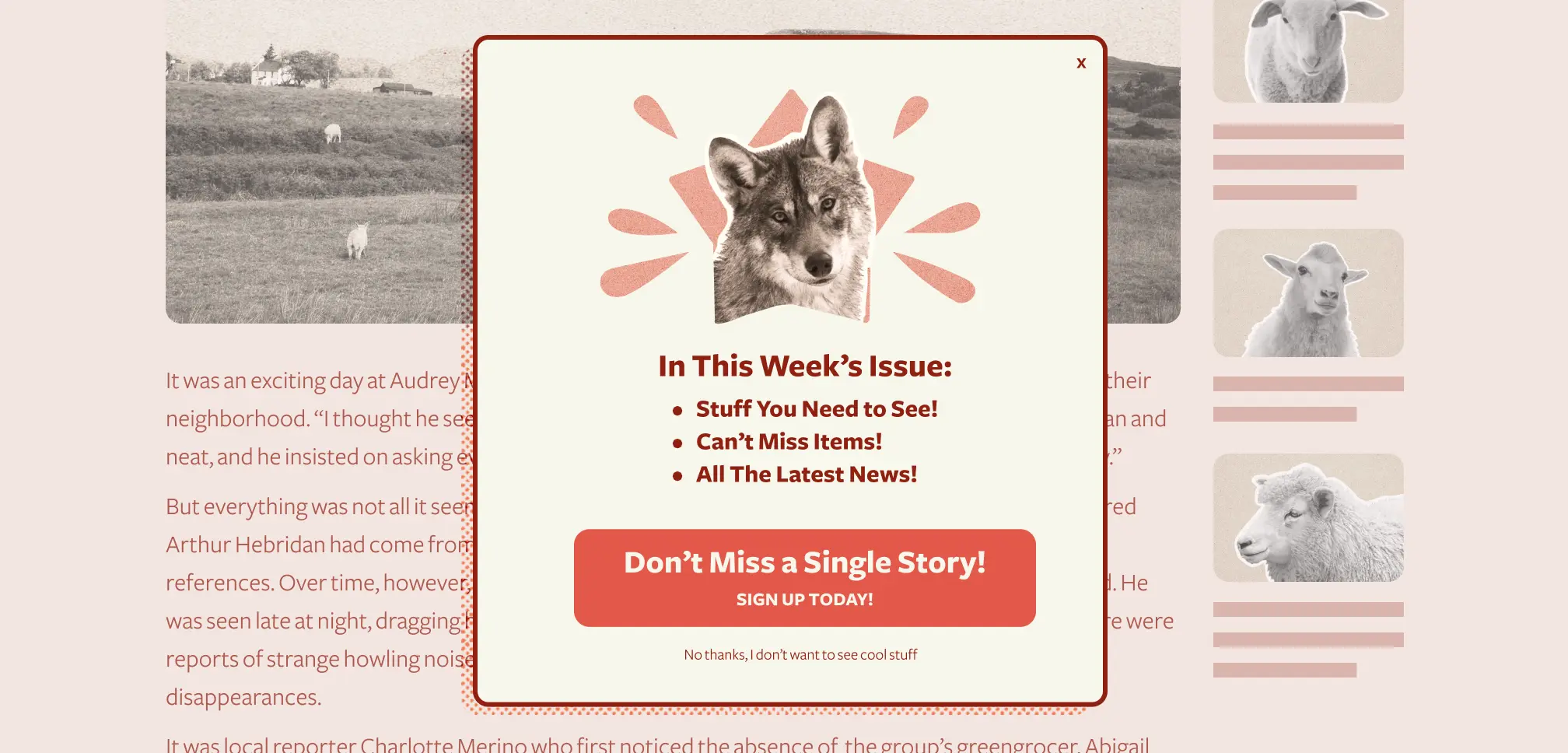
In the era of “surprise and delight,” many service providers have tip-toed out of the strictly professional tone of communications and into something with a bit more grey area, some of which can be shaming language. An example I see frequently employed by ecommerce retailers is a pop-up to join their email list for 10% off, and the opt-out option reads something like “no thanks, I hate savings.”
In another instance, an email I received last week from a former vendor began with, “I genuinely want to know why you gave up [us], but you keep ghosting me.” While this attempt at relatability rubbed me the wrong way, it is only a mild example of shaming language, where copy is written to use guilt, shame, or belittling to manipulate users into taking an action.
Visual Interference
There are numerous ways sites can employ this pattern, but it works exactly as it sounds, by interfering with the user’s ability to see or select any choice other than that which is preferred by the service. This may look like an unsubscribe link in white text on a white background, pop-ups positioned to cover up cancellation links intentionally, or employing barely legible text for opt-outs.
At Proven, we take very seriously our duty to build an equitable digital future for all users and believe it is our collective responsibility to ensure that technology serves as a bridge rather than a barrier. The antithesis of values-based marketing, design, and development, deceptive patterns have no place in the equitable digital future we’re building.
At the center of our work is the humanity that connects us all – including our experts and yours. Let us craft proven solutions for your most pressing challenges.